Regular price $29 You save $10 — launch price

Guide to Routine Home Maintenance
Guide to Routine Home Maintenance: Simple, seasonal checklists to protect your home's value, prevent costly repairs, and keep every system running smoothly.
7/2/20266 min read
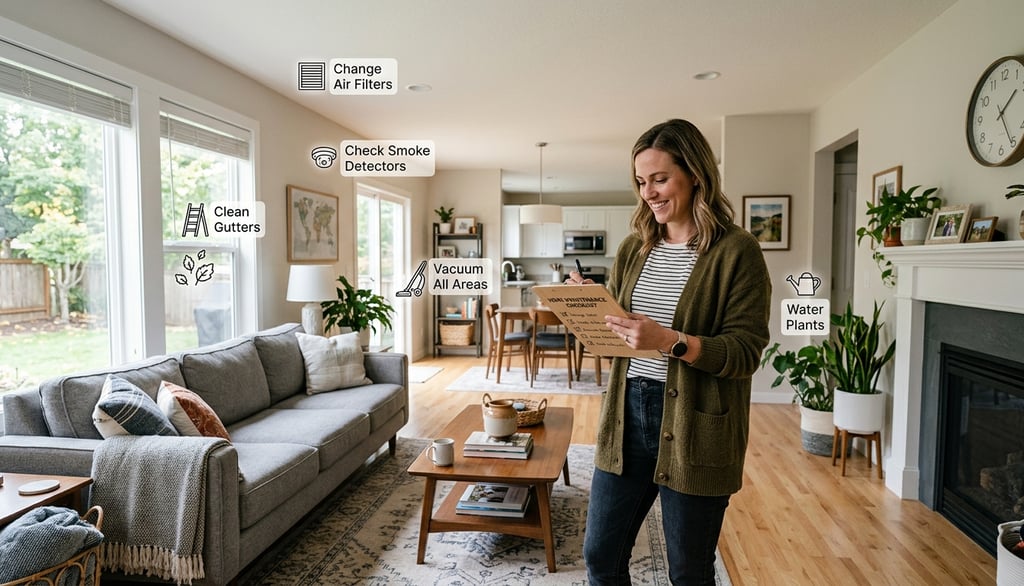
Guide to Routine Home Maintenance
Routine home maintenance is one of the easiest ways to protect your biggest investment and avoid surprise repair bills down the line. A simple, consistent home maintenance checklist keeps your home safer, more comfortable, and looking good year-round. Think of it as regular “health checks” for your house rather than waiting until something breaks.
Below is a practical, homeowner-friendly guide to routine home maintenance, broken into clear sections you can actually act on.
Indoor Home Maintenance Checklist
Indoor maintenance focuses on the systems and surfaces you use every single day, often without thinking about them. Staying on top of these small tasks helps your home run efficiently and keeps your family safe.
Use this as a quick routine home maintenance guide for your interiors:
Check and replace air filters on schedule
Clean sinks and faucet aerators
Maintain your garbage disposal
Care for fireplaces safely
Protect and clean floors properly
Deal with wall stains and white residue
Test safety and security devices regularly
Let’s break these down.
Air Filters
Air filters are a simple but critical part of routine home maintenance because they protect your HVAC system and your air quality. Many heating and cooling systems need filters changed at least every three months, but always check your specific model instructions.
A few quick tips:
Set a reminder on your phone for every 1–3 months
Hold the filter up to the light: if you can’t see through it, it’s time to replace
Use the right size and type recommended for your system
Clean filters help your system run more efficiently, which can lower energy bills and keep dust under control.
Sinks
Sinks work hard every day, and a little attention prevents low water pressure and bad smells. One often-forgotten task in routine home maintenance is cleaning the faucet aerator at the tip of the tap.
Easy steps:
Unscrew the aerator every 3–4 months
Rinse or soak it in a little vinegar to remove mineral buildup
Screw it back on tightly
For your garbage disposal, always run cold water while it’s in use to help move food waste through the system and keep it from overheating. Avoid putting grease, bones, or fibrous foods (like celery) down the disposal to extend its life.
Fireplaces
If you use a fireplace, it needs to be part of your regular home maintenance routine for both comfort and safety. A poorly maintained fireplace or chimney can become a serious fire risk.
Key habits:
Always build your fire on a grate or andirons, never directly on the fireplace floor
Store firewood outside, away from the house and off the ground to reduce pests and rot
Have a CSIA-certified chimney sweep inspect your chimney and fireplace at least once a year, especially if you burn wood often
Some homeowners like to sprinkle a bit of salt into the fire to help reduce soot and add a bit of color, but this should never replace proper cleaning and inspection.
Floors
Different floors need different care as part of routine home maintenance, especially in high-traffic areas. Using the wrong products can dull, stain, or damage the surface over time.
General guidelines:
Concrete (basement or garage): Seal bare concrete first to make it easier to clean, then wash with a mild solution and a stiff brush for tough spots.
Hardwood: Make sure your hardwood has a polyurethane finish before cleaning with water, and wax non-polyurethane floors periodically with a proper liquid or paste wax.
Vinyl: Use a water-based emulsion wax for shine and protection if needed.
Regular sweeping and quick cleanups of spills will extend the life of your floors and keep them looking fresh.
Walls
If you notice a white, powdery film on masonry walls, you’re likely seeing efflorescence. It’s simply crystallized salts that move to the surface when moisture evaporates, and it’s common on brick or concrete.
To handle it:
Brush the surface with a stiff brush and water
Make sure the area is well ventilated
Look for any underlying moisture issues if it keeps returning
Treating it early keeps your walls looking clean and helps you spot potential water problems sooner.
Safety and Security
No guide to routine home maintenance is complete without safety checks. These small tasks can literally save lives and should be scheduled at least once or twice a year.
Make a habit of:
Testing your home security system regularly and checking sensors one by one
Checking smoke and carbon monoxide detector batteries twice a year
Replacing both hard-wired and battery-powered detectors every 10 years
Tie these checks to a memorable date (like daylight saving changes) so they don’t fall through the cracks.
Key Outdoor Maintenance Tasks to Protect Your Home
Outdoor maintenance protects your home from weather, water, and wear—and is a core part of any routine home maintenance checklist. By catching issues early, you can prevent leaks, rot, and structural damage.
Main areas to keep an eye on:
Roof, gutters, and downspouts
Windows and doors
Siding and exterior surfaces
Garage and moving parts
Let’s walk through each one.
Roof, Gutters and Downspouts
Your roof is your home’s first line of defense, so it deserves regular attention. Even if things look fine from the ground, small issues can grow quickly.
Best practices:
Have a qualified roofer inspect your roof every three years, including skylights and flashings
Check that gutters and downspouts are clear of leaves and debris so water can flow away from your home
Clogged gutters can cause water to spill over and seep into foundations, basements, or walls, leading to expensive damage that simple routine maintenance could have prevented.
Windows and Doors
Windows and doors are common spots for drafts, leaks, and energy loss, which is why they belong on every routine home maintenance list. A quick annual inspection goes a long way.
Focus on:
Checking exterior caulking around windows and doors for cracks or gaps; if you see splitting or mildew, remove and replace the caulk and clean the area first
Washing extremely dirty exterior glass with a simple mixture like equal parts vinegar and water or a bit of alcohol in warm water
Using crumpled newspaper or a lint-free cloth instead of paper towels to avoid streaks
Rubbing paraffin in the window tracks to help sticky windows slide more smoothly
These steps boost both comfort and curb appeal.
Siding
Siding protects your home’s structure from the elements, so including it in your routine home maintenance is essential. Ignoring it can lead to rot, peeling, and bigger structural issues later.
Simple things to do:
Inspect wood siding yearly to see if it needs repainting or touch-ups
Trim back shrubs and plants so they don’t rest against the siding and trap moisture
Give the exterior a gentle wash from time to time to remove dirt, mold, and pollution buildup
Keeping your siding clean and intact helps your home last longer and look better.
Garage
Garage doors and their moving parts quietly do a lot of work every week. A little routine maintenance here can prevent breakdowns and annoying noises.
Make it a habit to:
Oil the moving parts of your garage door about every three months
Listen for new grinding or squeaking sounds that might signal a problem
Check safety sensors to ensure the door reverses if something is in the way
This is a quick job that can usually be done in a few minutes but pays off in reliability and safety.
Simple Repairs
Part of routine home maintenance is knowing which simple fixes you can handle yourself and when to call in a pro. Tackling small issues early prevents them from turning into costly emergencies.
Here are some basic areas most homeowners will deal with from time to time.
Faucets, Sinks and Toilets
Leaks and clogs are common, but often easy to manage if you catch them early. Many faucet drips, for example, are caused by a worn washer.
Helpful basics:
For a dripping faucet, replacing the washer will often solve the problem
For clogged drains, start with a plunger or a plumber’s snake instead of harsh chemicals
For a stubborn toilet clog, a coil spring-steel auger (available at hardware stores) can usually break up deeper blockages
By handling small plumbing issues promptly, you can avoid water damage and higher water bills.
Pipes
Noisy or frozen pipes shouldn’t be ignored. They are both warning signs that your plumbing needs attention as part of your routine home maintenance.
Key tips:
Noisy pipes, especially near the water heater, may indicate vibration that can loosen fittings and eventually cause leaks, so have them checked and secured.
If pipes freeze, thaw them slowly to avoid creating steam pressure inside the pipe, which can cause it to burst.
Insulating exposed pipes in colder climates can also prevent freezing issues before they start.
Walls (Small Interior Repairs)
Beyond cleaning efflorescence on masonry, it’s good to know how to handle small interior wall repairs too. Tiny nail holes and hairline cracks are normal as homes settle.
For quick cosmetic fixes:
Use spackling compound to fill small nail holes or minor cracks in plaster or gypsum wallboard
Let it dry, sand lightly until smooth, then touch up with matching paint
These small touch-ups keep your walls looking fresh and can be bundled into your seasonal home maintenance routine.
Routine home maintenance doesn’t have to be overwhelming if you break it into small, repeatable tasks throughout the year. If you were to build your own checklist from this guide, which area of your home do you think needs attention first—indoor systems, outdoor protection, or simple repairs?
The Homeowner's Manual
Your home didn't come with an owner's manual. We built one.
© 2026 The Homeowner's Manual-Protecting residential value, one seasonal checklist at a time.
PREVENTATIVE UPKEEP