Regular price $29 You save $10 — launch price

Home Repair Solutions You Can DIY Today
Learn essential home repair tips and tricks to tackle common household fixes with confidence. Save money, avoid costly mistakes, and keep your home in top shape.
7/2/20263 min read
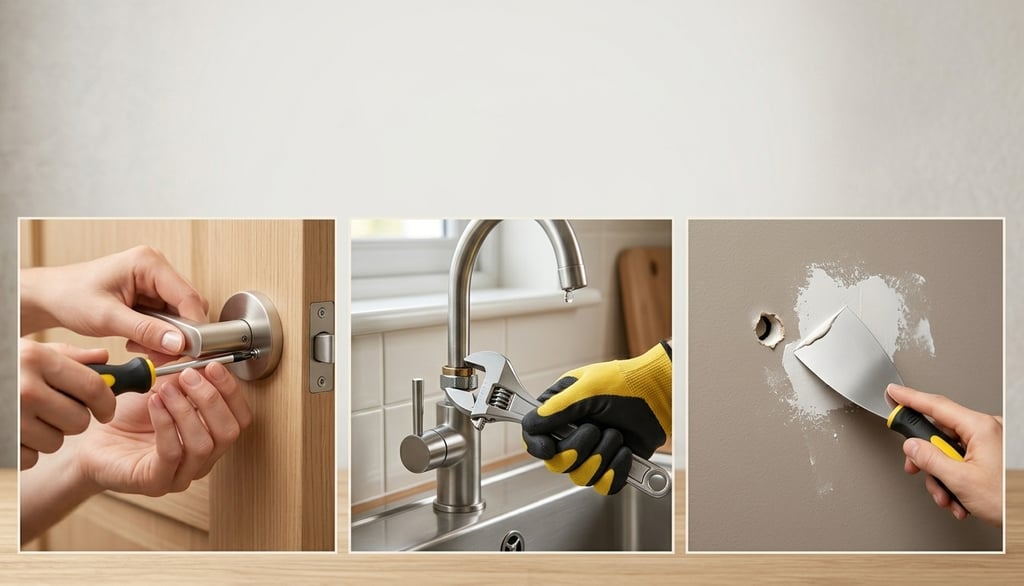
Home Repair Solutions You Can DIY Today
Every home has those little issues you keep meaning to fix but never get around to: a dripping faucet, a cracked tile, a sticky door, or a wall that’s seen better days. These aren’t just annoying—they can turn into bigger, more expensive problems if you leave them too long. Learning a few simple home repair solutions you can DIY today gives you control over your space and saves you serious money in the long run.
Below are practical, beginner‑friendly fixes you can tackle with basic tools and a bit of patience.
Fixing Leaky Faucets
A leaky faucet can waste litres of water and quietly bump up your utility bill. The good news? Most leaks come from worn‑out washers or cartridges, and you can replace these yourself.
Try this simple approach:
Turn off the water supply under the sink.
Carefully remove the handle and outer components.
Take the old washer or cartridge to the hardware store for an exact match.
Install the new part, reassemble, and turn the water back on.
Move slowly, keep track of how everything fits together, and you’ll have a drip‑free faucet without calling a plumber.
Unclogging Drains
Slow or clogged drains are one of the most common home repair problems, and they’re perfect for DIY. Most blockages come from hair, soap scum, or food particles, not something serious in the pipes.
Start with the gentle methods:
Use a drain snake or a simple plastic drain tool to pull out debris.
Pour hot (not boiling) water down the drain to flush remaining buildup.
Avoid heavy chemical cleaners; they can damage older pipes.
If the water still isn’t flowing freely after trying these steps, then it might be time to call in a pro—but many clogs clear with just a few minutes of DIY effort.
Patching Drywall Cracks and Holes
Nail pops, tiny cracks, and small holes are part of normal wear and tear, especially in busy family homes. You don’t need to be a contractor to freshen up your walls.
For small repairs:
Clean any loose dust or flaking paint around the crack or hole.
Apply lightweight spackle with a putty knife, smoothing it flat.
Let it dry, sand lightly, and touch up with matching paint.
For slightly larger holes, use a self‑adhesive patch before spackling. This gives the repair strength and helps it blend into the wall so your paint job looks clean and smooth.
Repairing Squeaky Floors
Squeaky floors are usually caused by wood rubbing against nails or other boards. It sounds like a big job, but often the fix is quick, especially if you can access the floor from below in a basement or crawlspace.
A few DIY solutions:
From above, sprinkle a bit of talcum powder or powdered graphite into the seams to reduce friction.
From below, add a few wood screws to secure loose boards to the joists.
Always pre‑drill when working from underneath to avoid splitting the wood.
In many cases, targeting the exact squeaky spot with one or two well‑placed screws is all it takes to quiet things down.
Troubleshooting Electrical Outlets (Safely)
If an outlet stops working, it doesn’t always mean you need an electrician. Sometimes, the culprit is a tripped breaker or a GFCI outlet that needs resetting. Safety is everything here, so never attempt complex electrical repairs if you’re unsure.
Before you call for help, you can:
Check your circuit breaker panel for a tripped breaker and reset it if needed.
Find any GFCI outlets in the same room (they often have “Test” and “Reset” buttons) and press “Reset.”
Test the outlet with a simple plug‑in device or lamp to confirm whether it’s working again.
If the outlet still doesn’t work, feels warm, or shows burn marks, stop there and call a qualified electrician. Basic troubleshooting is fine, but deeper electrical work should not be a DIY home repair solution.
Why These DIY Home Repair Solutions Matter
Each of these home repair solutions you can DIY today tackles a common problem that tends to snowball if you ignore it—wasted water, damaged walls, unsafe wiring, or noisy floors that get worse over time. By handling small repairs yourself:
You save money on service calls.
You extend the life of your home’s fixtures and finishes.
You gain confidence to tackle slightly bigger projects in future.
Start with one simple fix—maybe that leaky faucet or the crack by the hallway light switch—and use it as practice. The more you do, the more “home repair” feels like a normal part of looking after your space instead of something scary or expensive.
The Homeowner's Manual
Your home didn't come with an owner's manual. We built one.
© 2026 The Homeowner's Manual-Protecting residential value, one seasonal checklist at a time.
PREVENTATIVE UPKEEP