Regular price $29 You save $10 — launch price

The Annual Home Maintenance Schedule
Use an Annual Home Maintenance Schedule to organize home repairs, improve energy efficiency, and maintain a safe, comfortable living space throughout the year.
7/1/20263 min read
The Annual Home Maintenance Schedule
Owning a home isn’t just about paint colors and decor; it’s about quietly taking care of the things no one sees so your space stays safe, comfortable, and valuable year after year. A simple annual home maintenance schedule helps you do that without feeling overwhelmed.
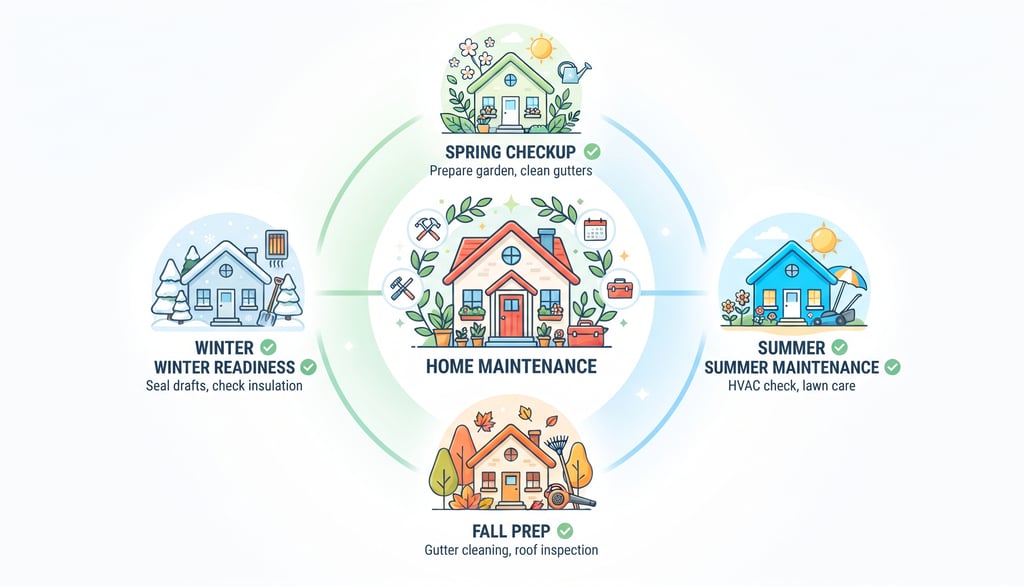
Think of it as a loop you repeat every year: monthly tasks, plus seasonal check‑ins in spring, summer, autumn, and winter. You’re not trying to do everything at once—you’re just giving each part of your home a turn on the calendar.
Monthly Home Maintenance Checklist
Your monthly home maintenance schedule is all about quick safety and efficiency checks that take minutes but prevent major headaches later. Add these to your calendar so they become part of your normal routine.
Test smoke and carbon monoxide detectors
Press the test button, listen for the alarm, and replace batteries if the sound is weak or they’re older than a year. Make sure you have detectors in hallways, near bedrooms, and any room with fuel‑burning appliances.Check the water heater
Look around the base for signs of leaks, rust, or damp patches. Once a year, drain the tank to remove sediment so it runs efficiently and lasts longer.Inspect windows and doors for drafts
Run your hand around window frames and door edges to feel for cold air or gaps. Seal cracks with caulk or weatherstripping to keep your home more comfortable and reduce energy bills.
Spring Cleaning and Inspection
Spring is the perfect time to step outside and see how winter treated your home. This part of your annual home maintenance schedule focuses on drainage and exterior protection.
Gutters and downspouts
Clear out leaves, twigs, and debris so rainwater can flow freely away from your foundation. Check that downspouts direct water away from the house to prevent pooling and potential structural issues.Exterior walls and roof
Walk around your home and look for cracks in walls, peeling paint, or damaged cladding. From the ground, scan the roof for missing or loose shingles and any areas that might need resealing or repair.
Summer Maintenance Tasks
Summer is all about catching hidden moisture problems and getting outdoor spaces ready for use. These tasks protect your home from water damage and make your garden or patio more enjoyable.
Check for water damage indoors
Look at ceilings, corners, and around windows for stains, bubbling paint, or musty smells. Deal with any leaks or damp patches quickly to avoid mold growth and deeper structural damage.Outdoor spaces and landscaping
Clean and inspect decks, patios, and outdoor furniture for loose boards, rust, or wear. Trim bushes and trees so branches don’t touch your siding or roof, which can trap moisture and invite pests.
Autumn Home Maintenance
Autumn is the time to prepare your home for colder weather and heavier use of heating systems. This section of the annual home maintenance schedule focuses on warmth, safety, and energy efficiency.
Service the heating system
Book a professional inspection to ensure your boiler or furnace is running safely and efficiently before winter hits. Replacing filters and catching issues early can save on energy bills and prevent breakdowns.Chimney and fireplace
If you use a fireplace, arrange for your chimney to be cleaned to remove creosote buildup. An annual inspection helps spot cracks or blockages that could cause smoke problems or fire hazards.Check and improve insulation
Look at attic insulation and any obvious gaps around loft hatches or exterior walls. Improving insulation keeps heat inside, reduces drafts, and makes your home more energy‑efficient over winter.
Winter Preparations
Winter prep is about protecting pipes, keeping your roof healthy, and being ready for emergencies. Doing these tasks before the first serious cold snap can save you from expensive damage.
Protect plumbing from freezing
Insulate exposed pipes in basements, garages, and outdoor areas, and disconnect garden hoses. During very cold spells, let a small trickle of water run from taps to keep pipes moving and reduce freezing risk.Attic inspection
Check for signs of pests, such as droppings or nests, and make sure ventilation openings aren’t blocked. Good airflow helps prevent moisture buildup, which can damage roof timbers and cause mold.Prepare an emergency kit
Put together a dedicated box with flashlights, spare batteries, blankets, basic first‑aid items, and non‑perishable food. Store it where everyone can find it quickly if there’s a power outage or severe winter storm.
When you follow an annual home maintenance schedule like this, you’re not just ticking boxes—you’re protecting your investment and creating a safer, more comfortable home for your family.
The Homeowner's Manual
Your home didn't come with an owner's manual. We built one.
© 2026 The Homeowner's Manual-Protecting residential value, one seasonal checklist at a time.
PREVENTATIVE UPKEEP